
A bundle can help close a sale without discounting the main product. In consumer research covered by Salsify's ecommerce report, 45% of consumers identified buy-one-get-one or similar bundle discounts as a purchase-completion driver. The opportunity is to sell more items together and make the next purchase decision easier.
I'd put bundling near the top of an ecommerce AOV testing backlog because merchants can change the basket, the incentive, and the placement together. Yet copying a combo meal or subscription package won't automatically create incremental revenue. You need to copy the mechanic, not just the product grouping.
Economically, a useful bundle raises perceived value, reduces decision friction, and gives customers a reason to increase their basket. Operationally, it must survive discounts, stock availability, picking costs, returns, and customers who would've bought everything anyway.
Practical rule: A higher order total isn't a win if you've paid for it with an even larger loss of margin.
These examples of bundling span fast food, software, subscriptions, telecommunications, and Shopify-native offers. Treat each as a testable combination of trigger, placement, discount structure, and KPI. The best bundles feel like shortcuts to a complete outcome, not sales pitches for products shoppers never wanted.
Table of Contents
- 1. Fast Food Value Meal Combo Bundling
- 2. Free Shipping Threshold and Add-On Bundling
- 3. Shopify Product Bundles and Frequently Bought Together Offers
- 4. Amazon Prime Membership Bundling
- 5. Microsoft 365 Suite Bundling
- 6. Adobe Creative Cloud All Apps Bundling
- 7. Apple One Subscription Bundling
- 8. Telecom Triple and Quad Play Bundling
- 8 Bundling Examples Compared
- Turning These Bundling Examples Into Your Next AOV Test
1. Fast Food Value Meal Combo Bundling
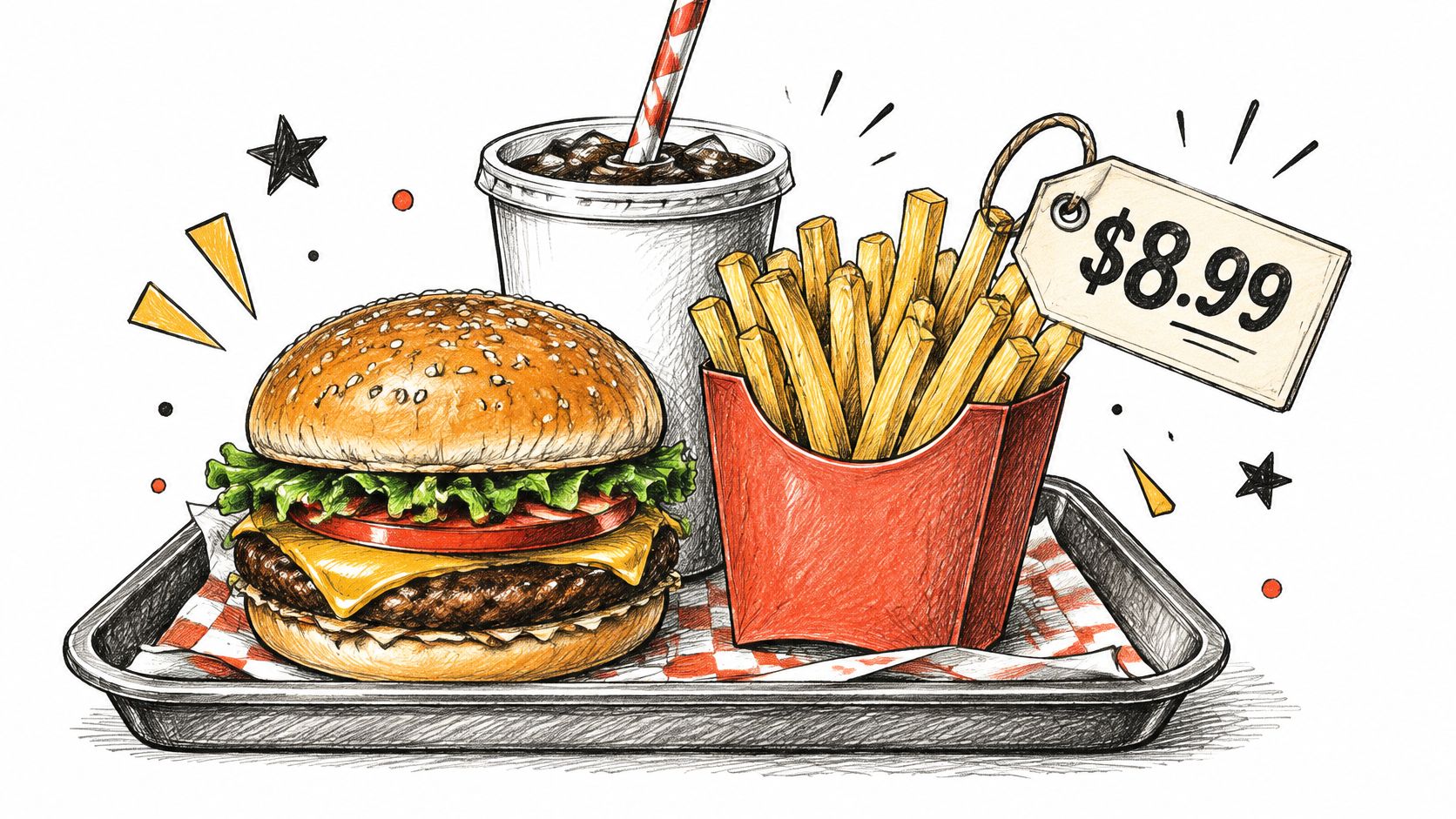
A burger, fries, and drink solve a complete purchase occasion. The customer doesn't have to build lunch from separate menu decisions, and the merchant can offer a more attractive combined price without discounting every component equally.
That's the useful lesson for ecommerce: bundle around a finished job. A coffee merchant could pair beans with filters and a storage container. A seasonal version might substitute a limited-run roast while keeping the familiar kit structure.
Replicate the Complete-Meal Mechanic
- Trigger: A shopper selects the hero product, such as coffee beans.
- Placement: Show the complete kit beside the standalone purchase option, before add to cart.
- Discount structure: Offer a fixed package price, with the concession concentrated on accessories that can afford it.
- Primary KPI: Track contribution margin per eligible session, supported by AOV and kit attachment.
Keep the standalone option visible. That makes this mixed bundling, rather than forcing customers to buy the entire set. You can recommend the kit visually without preselecting unwanted products.
Swaps help when customers have legitimate differences in need. Let shoppers choose a filter size or coffee grind, but don't turn a quick decision into a configuration project.
The common failure is assuming the side items are profitable because they're inexpensive. Include packaging, picking, and shipping weight in the calculation. A bulky storage container can erase the benefit of adding a seemingly high-margin accessory.
2. Free Shipping Threshold and Add-On Bundling
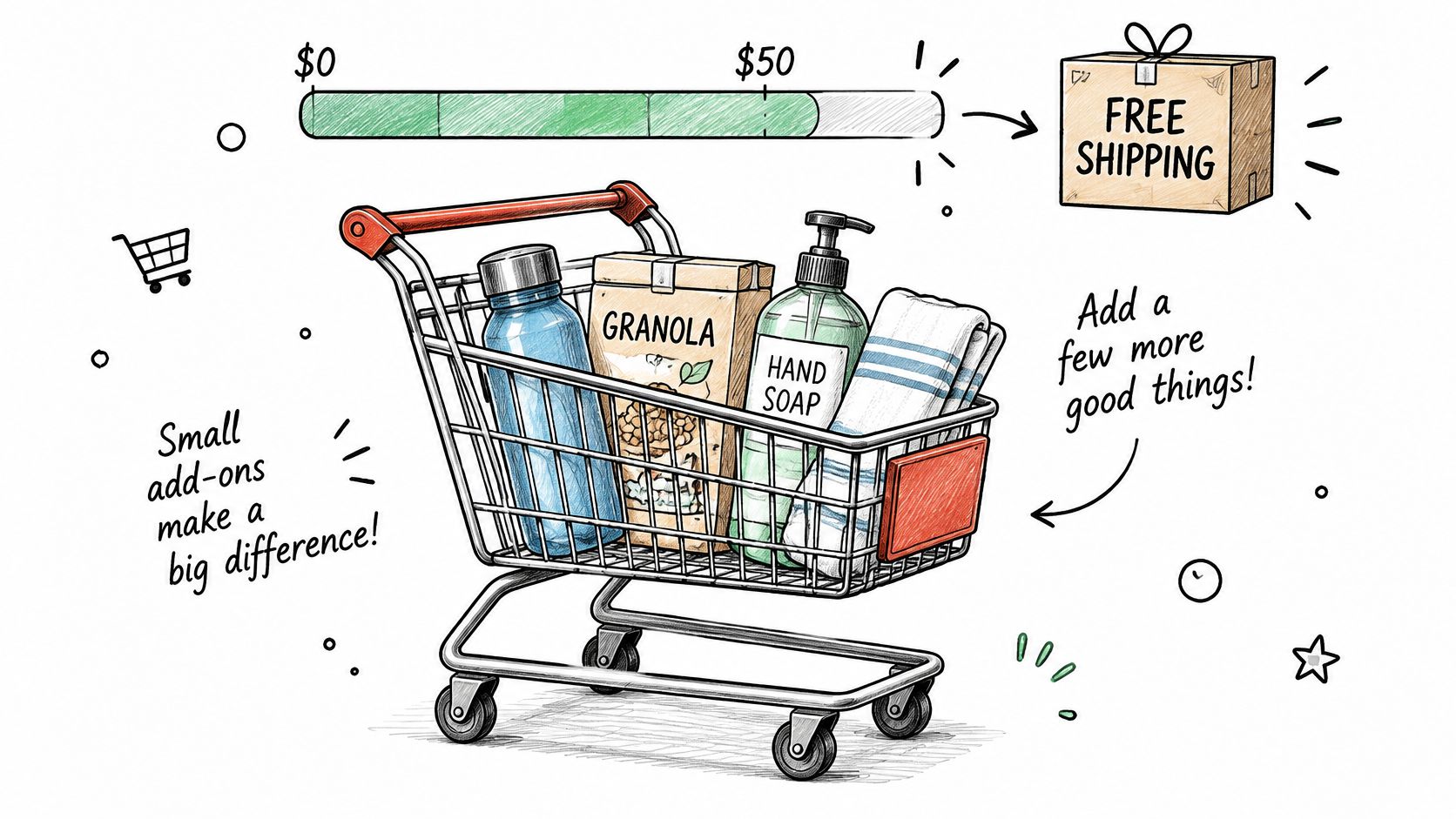
Free shipping creates a different kind of bundle: customers assemble the qualifying basket themselves. The reward applies to the order rather than to a predefined product group.
Say a football-shirt buyer is close to qualifying. A relevant display or care accessory gives them a useful way to close the gap. The merchandising logic behind football collector accessory bundles is more relevant to that shopper than an unrelated clearance item.
Set the Goal Around Reachable Baskets
Start by inspecting your order-value distribution, not just its average. Put the threshold within reach of common baskets, then check whether the added merchandise can cover the shipping subsidy.
- Trigger: An eligible cart sits below the free-shipping threshold.
- Placement: Show the remaining spend in the cart drawer, next to relevant in-stock add-ons.
- Discount structure: Keep merchandise at its normal price and grant free shipping when the qualifying subtotal is reached.
- Primary KPI: Measure contribution margin per cart session, alongside checkout conversion and shipping cost per order.
Use a Shopify free-shipping bar to explain the gap clearly. State whether discounts affect qualification and whether particular destinations or products are excluded.
Don't make customers spend substantially more just to avoid a shipping charge. Give them a useful addition and an honest choice.
Watch carts that already qualified before the test. Subsidizing those orders is a real cost, even though the progress bar didn't change their contents. Compare exposed shoppers with a holdout rather than celebrating threshold attainment alone.
3. Shopify Product Bundles and Frequently Bought Together Offers
Frequently bought together should mean relevant, available, and compatible, not merely products displayed together. John Lewis & Partners achieved a 5% increase in sales value per customer session in an initial test of personalized complementary-product recommendations, according to the Equal Experts case study.
The implementation combined browsing and purchase behavior with filtering for availability and predicted relevance. That's a more useful model than permanently attaching the same accessory to every product in a category.
The demonstration below provides a visual reference for an on-site offer experience.
Build Around the Product's Next Useful Step
For a relaxation brand, a curated set such as bundled shower steamers for relaxation can introduce complementary options without asking customers to browse the full catalog. A starter kit should explain why the contents belong together, not just display a crossed-out total.
Distinguish a fixed kit from an optional add-on before configuring it. This product bundle explainer provides a useful starting point for defining the offer.
- Trigger: The shopper adds a qualifying product or variant.
- Placement: Test the product page, add-to-cart popup, and cart drawer separately.
- Discount structure: Discount the complementary item only when the qualifying hero product remains in the order.
- Primary KPI: Use sales value per eligible session, with contribution margin and returns as guardrails.
Suppress unavailable variants and incompatible accessories. Also define what happens when customers remove a qualifying item or return part of the bundle. An attractive offer that produces fulfillment exceptions isn't ready to scale.
4. Amazon Prime Membership Bundling
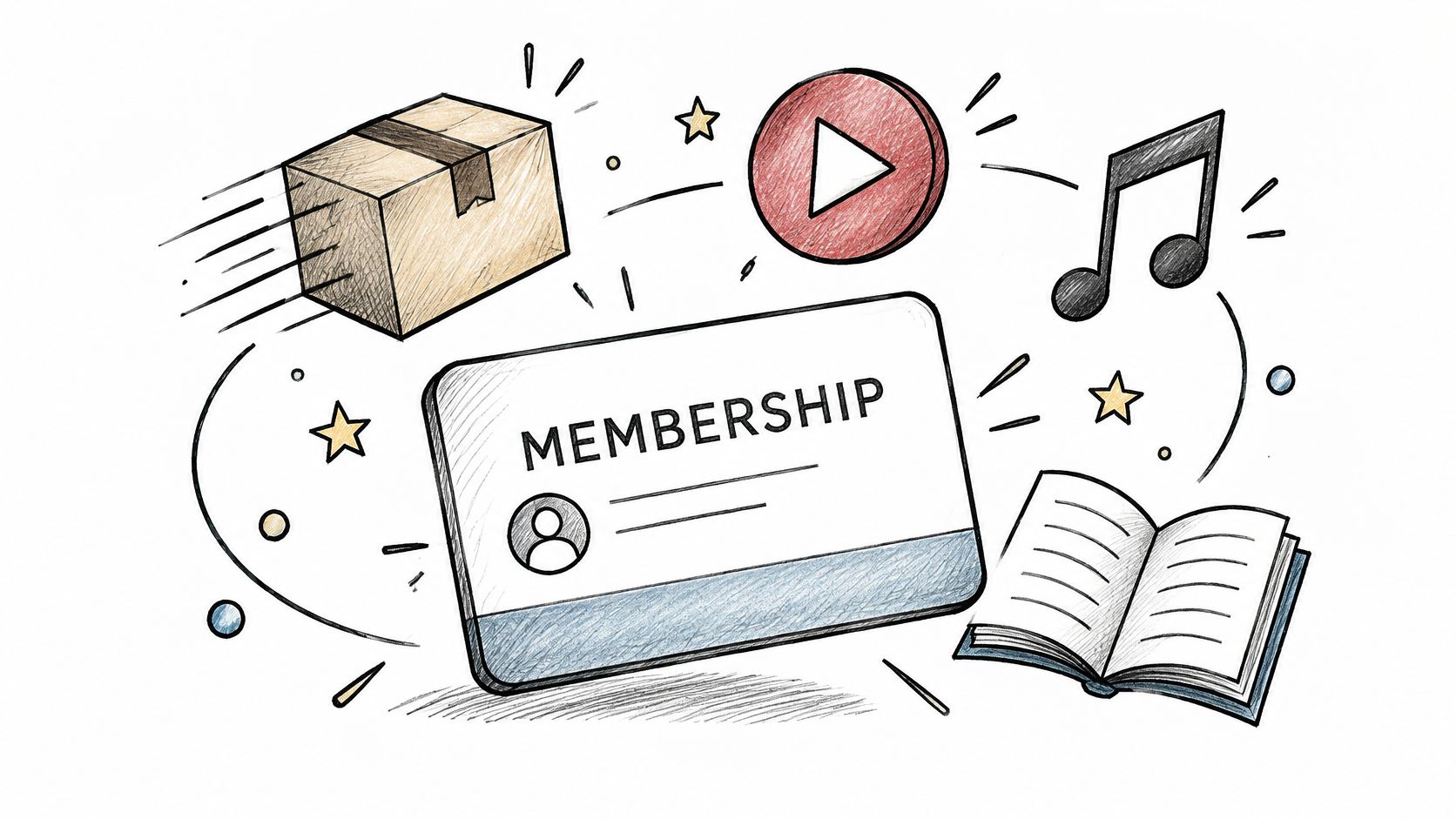
Amazon Prime illustrates membership bundling: customers join for access to an ongoing collection of benefits rather than a single discounted basket. Shipping and entertainment make the concept recognizable, but a Shopify merchant shouldn't try to imitate its breadth.
The transferable mechanic is giving an identifiable customer group a reason to return. A coffee brand could combine member shipping benefits, replenishment access, and selected member pricing. The central question is whether those benefits change purchasing behavior enough to cover their cost.
Sell the Benefit Customers Will Actually Use
Lead the enrollment experience with the strongest practical benefit. Don't give every perk equal space just because it exists.
- Trigger: A returning shopper reaches a purchase or replenishment moment.
- Placement: Present membership on the account page or beside a relevant cart benefit.
- Discount structure: Offer clearly defined member benefits rather than an unrestricted storewide discount.
- Primary KPI: Track incremental contribution per member, supported by purchase frequency, renewal, and benefit cost.
Retail subscription bundles aren't unusual: 31% of U.S. shoppers with retail subscriptions obtained at least one subscription through a bundle in 2024, according to Bango's survey of American shoppers. That establishes familiarity, not proof that a membership will work for your catalog.
The trade-off is selection bias. Your best customers may join first, making members appear more valuable even if membership changes nothing.
Compare similar customer cohorts and account for purchases that would've happened without the benefits. If shoppers join mainly to subsidize an order they'd already planned, you've created a discount program, not stronger loyalty.
5. Microsoft 365 Suite Bundling
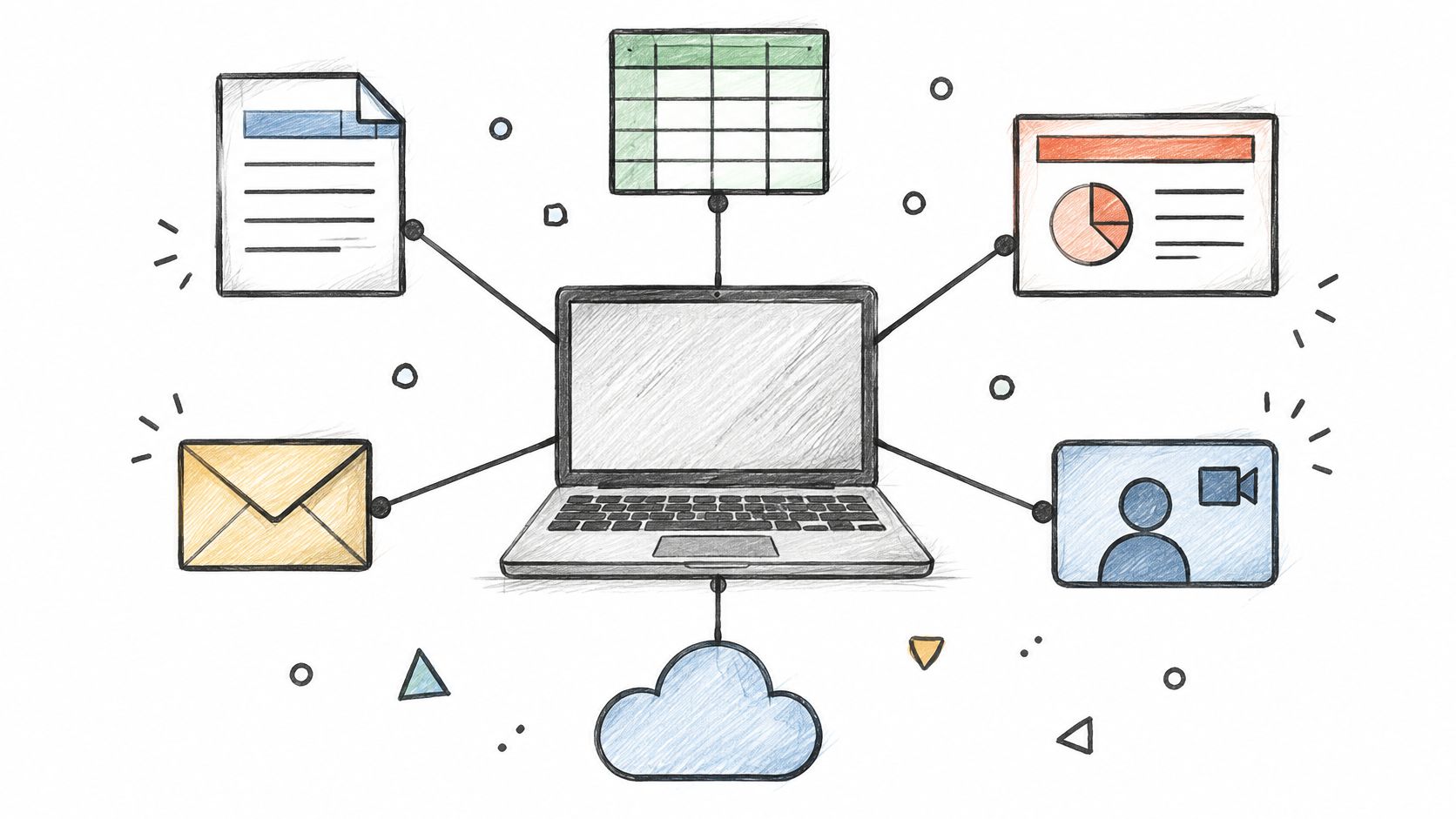
Microsoft 365 is a useful reference for workflow bundling. Word, Excel, PowerPoint, Outlook, and related services address different parts of the same working day. The ecommerce equivalent is a collection whose components become more useful together.
For a camera retailer, that might mean a camera, compatible memory card, and protective bag. The offer should answer “Can I use this properly when it arrives?” rather than “How many accessories can we add?”
Package Compatibility, Not Just Quantity
Keep the entry product available for buyers who already own the accessories. Then present the complete setup with a clear contents list and an accurate comparison against current standalone prices.
- Trigger: A shopper views a product that requires supporting items.
- Placement: Put the complete setup next to the standalone option on the product page.
- Discount structure: Use a package price or accessory-specific concession while protecting the hero product.
- Primary KPI: Measure complete-kit conversion per eligible session, plus contribution margin and compatibility-related returns.
Microsoft's history also shows why reducing friction isn't the only consideration. The Computer History Museum's account of the Internet Explorer case describes antitrust litigation over distributing the browser with Windows and the competitive advantage of preinstallation.
That isn't a legal analogy for every retail kit. It's a reminder to preserve meaningful choice and describe the offer clearly.
Operator's test: If removing an accessory makes the customer's purchase less useful, explain why. If it only makes your basket smaller, don't pretend it's essential.
6. Adobe Creative Cloud All Apps Bundling
Adobe Creative Cloud illustrates the difference between an entry purchase and a complete suite. A customer may need a single creative tool, while another needs applications covering several stages of production.
For merchants, the replicable tactic is an upgrade path that follows demonstrated need. A maker buying a starter paint set might later want a studio bundle with additional colors, preparation materials, and finishing supplies. Don't lead every first-time buyer straight to the largest package.
Make the Upgrade Explainable
Build the premium offer around additional work the customer can accomplish. A larger item count isn't a compelling reason to upgrade if shoppers can't tell what the extra products do.
Show the starter and complete options side by side. Explain which customer each suits, identify the incremental contents, and calculate savings from genuine standalone prices.
- Trigger: The shopper selects an entry product or explores several related categories.
- Placement: Present the upgrade on the product page or in a contextual add-to-cart offer.
- Discount structure: Make the full set attractive without cutting its price so far that the entry option looks pointless.
- Primary KPI: Track incremental gross profit per eligible visitor, supported by upgrade acceptance and conversion.
For replenishable supplies, recurring billing can be an option, but it shouldn't be the hidden condition behind the advertised price. State delivery cadence, renewal terms, and how customers change the contents before they commit.
A premium bundle should help a customer do more, not make the smaller purchase feel deliberately inadequate.
Watch entry-product conversion during the test. If more shoppers choose the large bundle but fewer shoppers buy anything, a higher AOV can disguise a weaker offer.
7. Apple One Subscription Bundling
Tier by usage, not by arbitrary SKU count. Apple One offers a recognizable model for grouping services around different customer needs. Its relevance to physical-product merchants is the tier structure, not the assumption that every catalog should become a subscription.
A personal-care merchant could offer an individual replenishment kit, a shared-household kit, and a broader routine. The differences should follow consumption, preferences, and delivery frequency rather than just adding more products.
Keep Flexibility Inside the Offer
Subscription fatigue changes the design brief. 44% of consumers say subscriptions take a moderate or significant share of their budget, according to Bango's Gravity Shift report. Adding unwanted items to a recurring bill isn't convenience.
- Trigger: A customer selects a replenishable product or changes an existing subscription.
- Placement: Explain tiers on the subscription product page, before payment details.
- Discount structure: Show the recurring bundle price against equivalent standalone purchases, with matching quantities and billing periods.
- Primary KPI: Track retained contribution by subscription cohort, supported by renewal, cancellation, and substitution behavior.
Use a clear comparison of contents, eligibility, cadence, and savings. These product bundling pricing examples can help frame the pricing decision without making every tier depend on a deeper discount.
Let customers swap variants, skip unwanted replenishment, or move to a smaller tier where operations permit. Define how upgrades affect billing and fulfillment.
A strong first-order AOV is insufficient here. Review whether customers consume the products and renew willingly, rather than accumulating excess stock and cancelling the entire package.
8. Telecom Triple and Quad Play Bundling
Telecommunications shows how bundling can become the standard purchasing format. Bundled communication services represented 69% of all fixed-broadband offers across OECD economies in 2023, according to the OECD Digital Economy Outlook.
Triple play combines fixed broadband, fixed voice, and television; quad play adds mobile connectivity. The merchant-side lesson is to expand an existing relationship with adjacent products while simplifying account management.
Combine the Customer's Ongoing Jobs
Consider a pet merchant offering food, grooming supplies, and recurring treats. Those products share a customer, but they may not share a replenishment cadence. The bundle needs flexible operations, not just a combined checkout button.
- Trigger: An existing customer buys or replenishes the anchor product.
- Placement: Offer the adjacent service or product in account management or an eligible order-editing flow.
- Discount structure: Disclose the combined price, the introductory benefit, and the ongoing price clearly.
- Primary KPI: Measure cohort contribution and retention, with support contacts and partial cancellations as guardrails.
Don't assume that adding benefits always increases adoption. 57% of U.S. internet households had a value-added bundle in 2024, down from 61% in 2023, according to Parks Associates. More components aren't automatically more appealing.
Give shoppers a clear way to see what's included, change quantities, and understand what happens when they remove a component. If introductory savings expire, disclose the replacement price before enrollment and communicate the change clearly.
The objective is a simpler ongoing relationship. If customers need support to understand their bill or remove an unwanted item, the bundle has added friction instead.
8 Bundling Examples Compared
| Example | Bundle Type | Primary Channel | Best For | Main Risk |
|---|---|---|---|---|
| Fast Food Value Meal Combo Bundling | Meal combo | Restaurant menu and counter | Increasing order value with a simple meal offer | Discounted margins or kitchen complexity |
| Free Shipping Threshold and Add-On Bundling | Spend-threshold add-ons | Ecommerce cart | Encouraging shoppers to reach a minimum spend | Shipping costs can erode margins |
| Shopify Product Bundles and Frequently Bought Together Offers | Fixed, mix-and-match, or recommended product bundles | Product pages and cart | Raising order value with complementary products | Inventory errors or excessive discounting |
| Amazon Prime Membership Bundling | Membership benefits | Ecommerce platform and subscription | Improving loyalty and purchase frequency | High benefit costs |
| Microsoft 365 Suite Bundling | Productivity software subscription | Desktop, web, and subscription sales | Packaging complementary tools for recurring revenue | Customers may pay for unused components |
| Adobe Creative Cloud All Apps Bundling | Tiered software subscription | Desktop, web, and subscription sales | Upselling users who need multiple creative tools | High cost for occasional or single-app users |
| Apple One Subscription Bundling | Tiered services subscription | Digital services ecosystem | Increasing adoption and retention across services | Limited savings for customers who want one service |
| Telecom Triple and Quad Play Bundling | Multi-service contract | Telecom provider sales and account channels | Increasing retention by consolidating services | Price increases or unwanted services |
Turning These Bundling Examples Into Your Next AOV Test
Choose the model that matches how customers already buy. Use a combo when products complete a clear job, a threshold when shoppers can reach a useful reward with relevant additions, and frequently bought together when compatibility or purchase patterns support the recommendation. Use a tiered offer when customers have different needs.
Then choose the highest-intent moment you can serve without interrupting the purchase. A cart drawer suits spend goals, an add-to-cart popup suits a specific complement, and post-purchase order editing suits a forgotten accessory. Don't launch the same offer everywhere simultaneously, because you won't know which placement earned the result.
Define the Win Before Launch
- AOV: Compare order value between test and holdout groups, not just bundle buyers and non-buyers.
- Attach rate: Divide accepted offers by eligible opportunities, using a consistent denominator.
- Offer-level conversion: Record impressions and purchases separately for each placement.
- Contribution: Deduct discounts, product costs, payment costs, fulfillment, shipping subsidy, and expected returns.
Keep a holdout and avoid changing the product mix, discount, and placement together after launch. Segment results by new and returning customers where volume allows. A promotion that merely discounts habitual purchases needs a different decision from one that recruits incremental orders.
If you want to increase order totals with shipping thresholds, start with the distribution of current carts and the economics of shipping them. The target isn't a prettier progress bar. It's a profitable change in what customers buy.
For implementation, our ServeApps suite provides separate Shopify tools for these moments. UpServe runs frequently bundled add-to-cart popup offers with merchant-set discounts and per-popup analytics; CartServe handles free-shipping goals and spend tiers in a no-code cart drawer. SelfServe presents relevant recommendations during order editing, where recommendations convert at 3–5x the rate of a static thank-you page upsell.
The apps install independently from the Shopify App Store and work alone or together. We provide in-app support from the product team, and public merchant feedback includes 33 five-star App Store reviews.
Ship a focused bundle test this week. Measure it per placement, inspect its margin and operational consequences, and expand only the combinations that earn their discount.
ServeApps offers Shopify cart drawers, contextual upsell popups, and self-service order editing to put relevant bundle offers at specific buying moments. Visit ServeApps to choose the placement for your first test, then measure accepted offers and incremental contribution before expanding.
Shopify Store Credits: Issuing, Redeeming and Accounting
Learn what Shopify store credits are, how they differ from gift cards and refunds, and how to issue, redeem and account for them.
Read more →
Can You Have Multiple Stores on Shopify? Plans and Limits
Can you have multiple stores on Shopify? Yes, through organizations or Plus expansion stores. Compare plan limits, eligibility and setup tips.
Read more →
Product Customizer App Shopify: Choosing the Right Tool
Compare native and third-party product customizer app shopify options on speed, theme support, variant mapping and SKUs before you install one.
Read more →